











An integrated large-scale photonic accelerator with ultralow latency
Nature Publishes Lightelligence’s Optoelectronic Hybrid Computing Achievement
Original link: https://www.nature.com/articles/s41586-025-08786-6
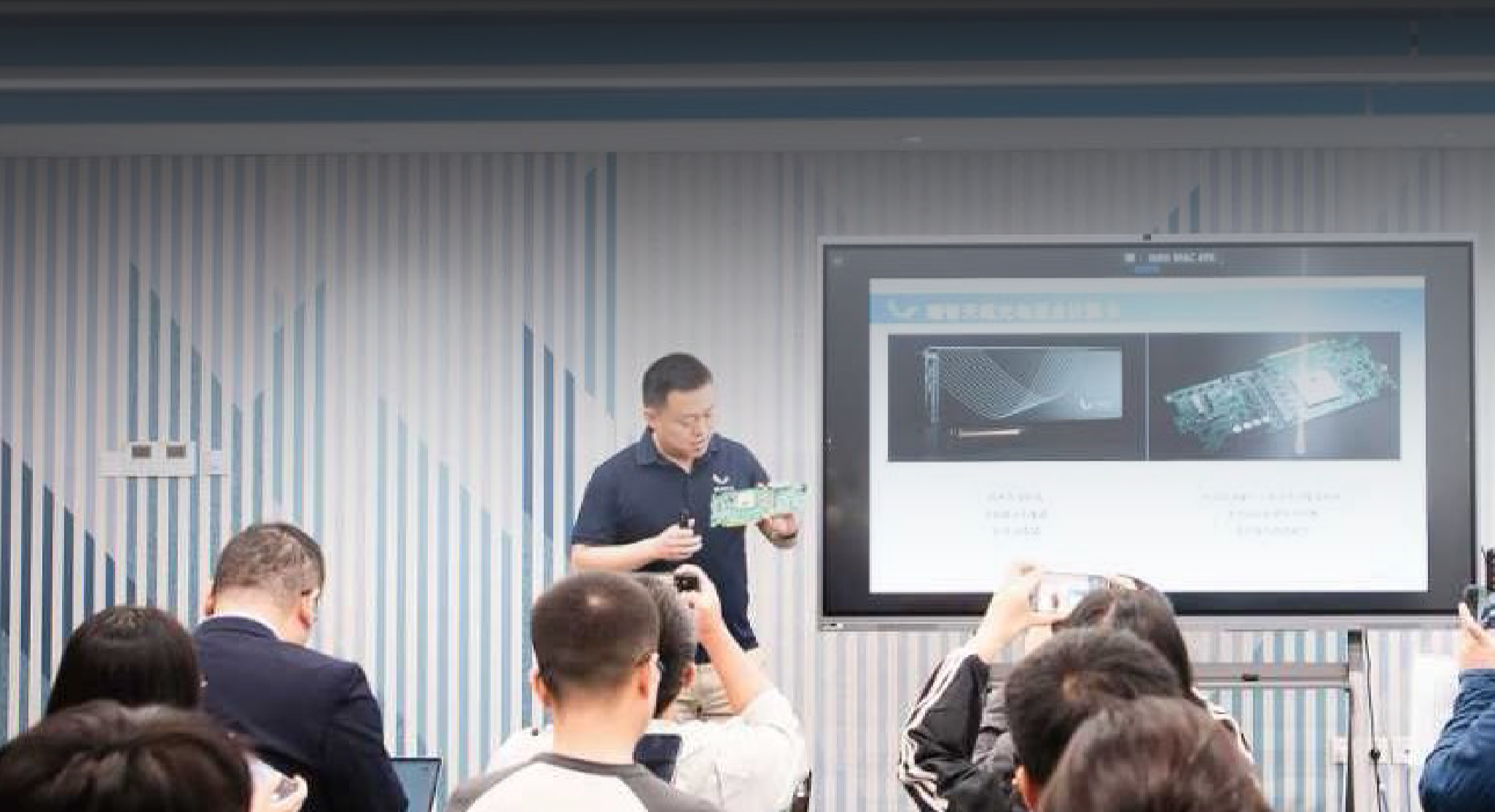
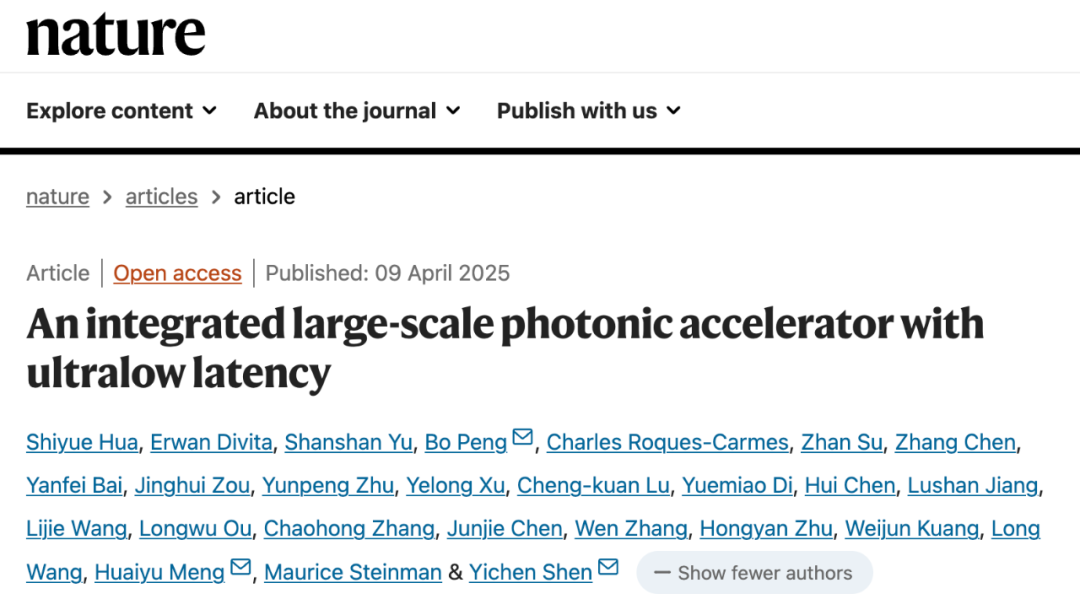
On April 9, London time, the world’s leading academic journal Nature published Lightelligence’s optoelectronic hybrid computing achievement: “An integrated large-scale photonic accelerator with ultralow latency.” This marks Lightelligence’s return to a top global academic journal since its founder, Dr. Yichen Shen, published a cover article in Nature Photonics eight years ago, titled “Deep learning with coherent nanophotonic circuits.” It is also another significant achievement for Lightelligence in optoelectronic hybrid computing, following the release of its latest optoelectronic hybrid computing card, Lightelligence Tianshu, on March 25.
This publication in Nature once again affirms the industry’s recognition of Lightelligence’s successful development of the highly integrated photonic computing processor PACE (Photonic Arithmetic Computing Engine). Dr. Yichen Shen stated, “PACE is a product we released in 2021. We chose to publicly disclose its product details in a top journal like Nature to open up our technology roadmap, encourage more people to participate in this industry, and accelerate the industrial adoption of the optoelectronic hybrid ecosystem.”
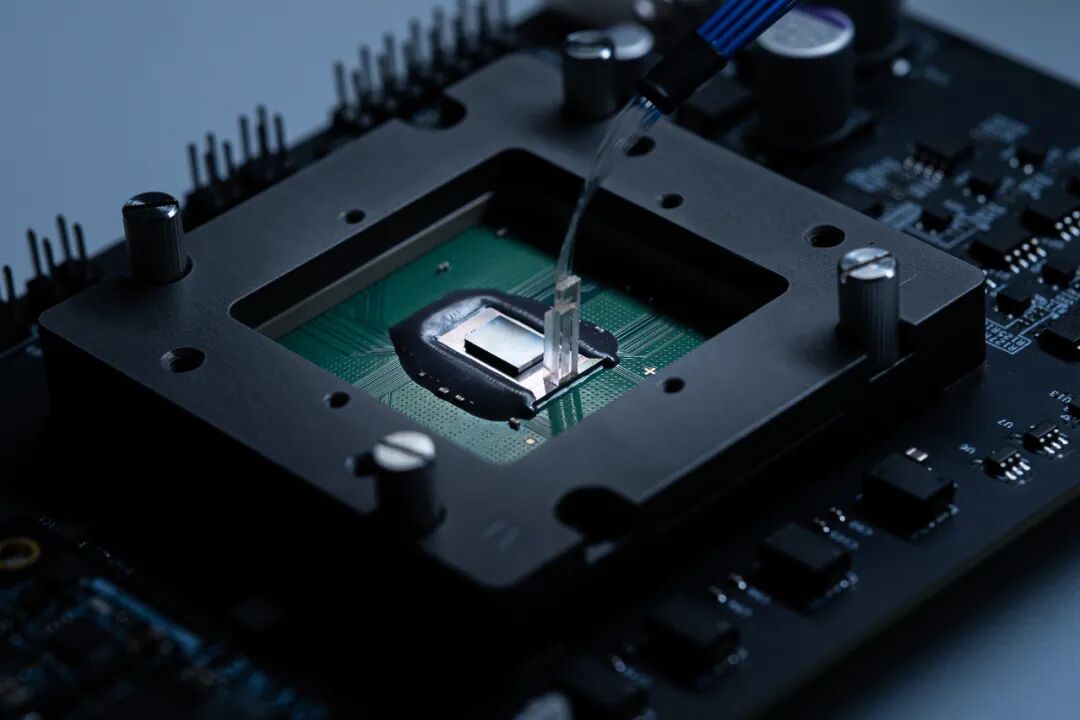
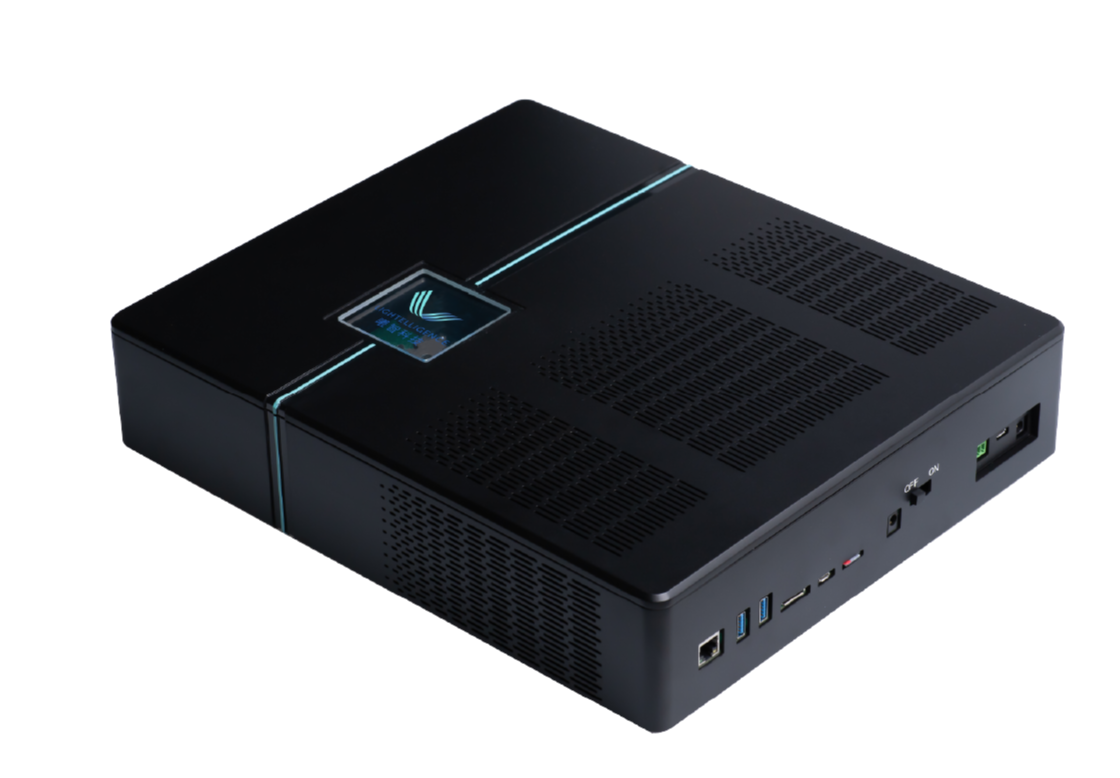
PACE Optoelectronic Hybrid System
In recent years, with advances in silicon photonics, nanophotonics, materials science and related fields, global interest in optical computing has continued to grow. However, most research results remain at the laboratory stage. The key reason that Lightelligence’s productized achievement has been published in Nature is that it demonstrates a large-scale optoelectronic integrated computing card manufactured on a commercial production line, and provides full measured data confirming its significant advantage in computational latency.
he reviewer highly commended the Lightelligence team’s efforts in engineering photonic computing: “In the field of photonic computing, optimistic extrapolations from small-scale demonstrations to large-scale system performance are common. But the data in this paper are all measured from the full PACE computing system. The authors have engineered and realized a very large-scale photonic matrix computing system, which is truly a tour de force.”
PACE leverages the fundamental principle that optical matrix-vector multiplication introduces extremely low latency. By repeating matrix multiplications and cleverly using a tight feedback loop with controlled noise, it generates high-quality solutions to combinatorial optimization problems such as Ising problems and Max-cut/Min-cut problems, all while keeping latency low.
In the paper, Lightelligence also publicly disclosed the specific architecture of its optoelectronic hybrid computing for the first time. Over the years of productization efforts, the R&D team at Lightelligence found that photonic matrix engines based on incoherent architectures offer advantages in precision control, matrix adjustment flexibility, and noise resilience, making them more conducive to commercial deployment. Lightelligence’s COO, Long Wang, said: “PACE is the representative achievement of one of Lightelligence’s three core technologies — optical matrix computation (oMAC). Since the advent of PACE, the Lightelligence team has continued to improve the flexibility of optoelectronic hybrid systems and the efficient co-optimization of photonic and electronic chips, constantly expanding into broader application scenarios.”
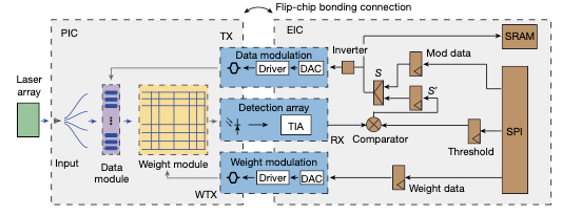
PACE System Architecture Diagram
In 2017, Dr. Yichen Shen published a cover paper in Nature Photonics titled “Deep learning with coherent nanophotonic circuits,” proposing for the first time a method for deep learning computation using coherent nanophotonic circuits. This work is widely regarded as a pioneering advance in integrated photonics. That same year, Dr. Shen founded Lightelligence, dedicated to productizing and commercializing photonic computing.
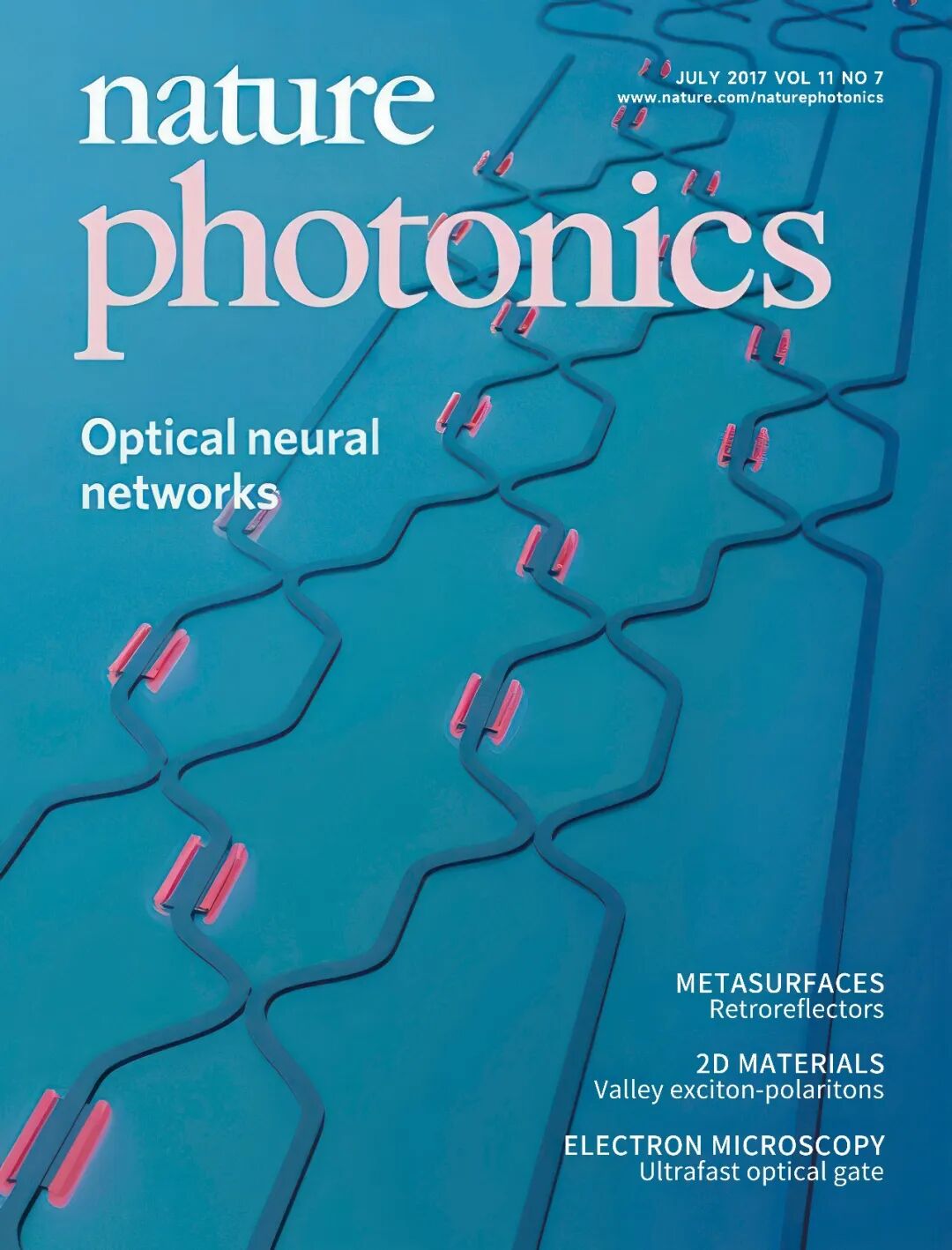
One of the most influential papers in integrated photonics
In 2019, Lightelligence unveiled its first photonic computing prototype board, which successfully ran a convolutional neural network model included with Google TensorFlow to process the MNIST dataset, validating the feasibility of photonic computing. Since then, the Lightelligence team has continuously explored scaling matrix sizes and improving photonic chip integration, while steadily strengthening engineering capabilities in electronic chip design, packaging, software, and systems.
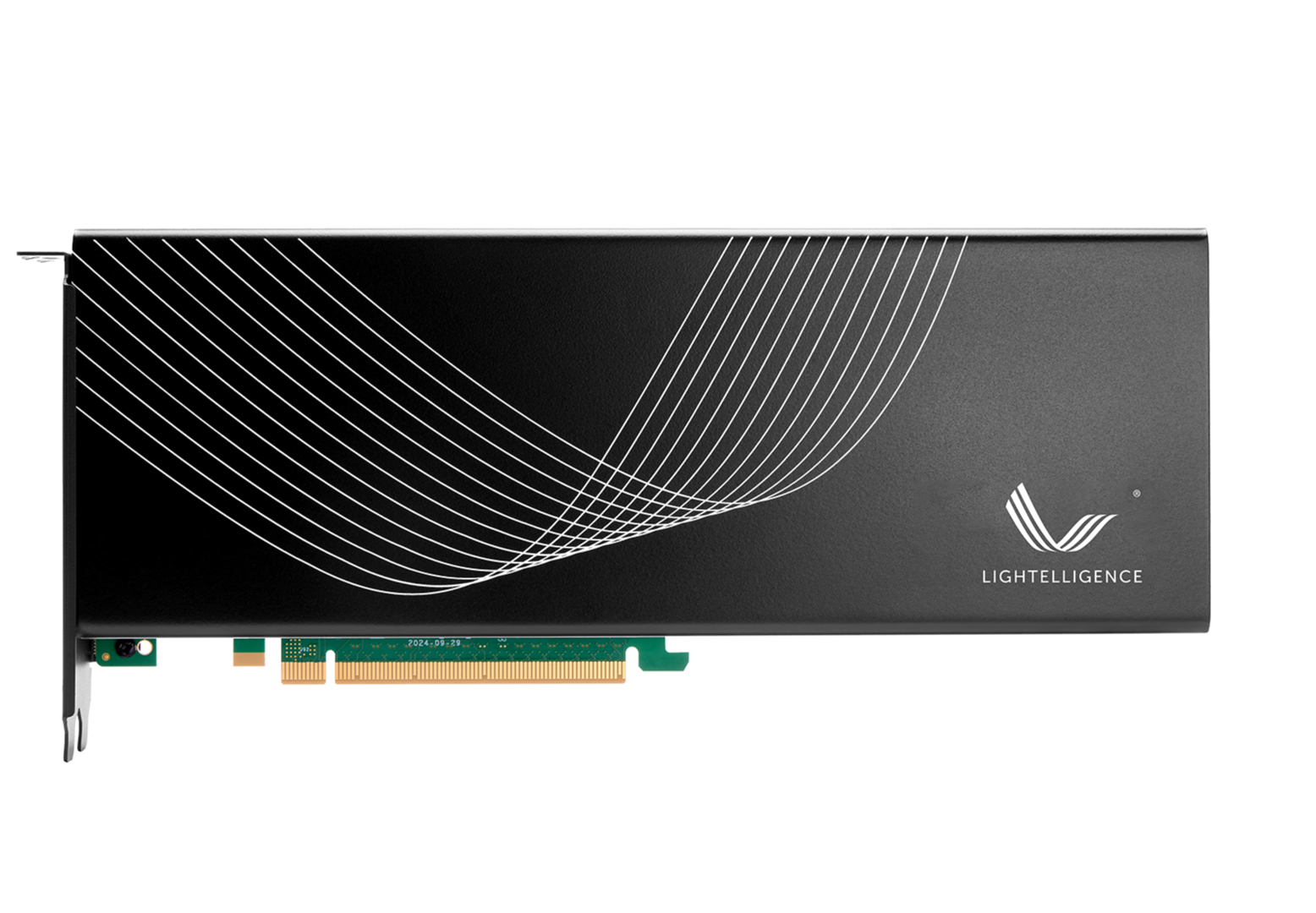
The launch of PACE in 2021 marked a major leap for optoelectronic hybrid computing — from proof of concept to productization. In March 2025, the Lightelligence Tianshu Compute Card was introduced, quadrupling the photonic matrix size to 128×128 and addressing several key engineering challenges, including the first successful implementation of 3D TSV advanced packaging on an optoelectronic hybrid chip, and the miniaturization and onboard integration of the light source. This made Tianshu a standard full-height, full-length PCIe card that can be plugged directly into existing server hardware. More importantly, Tianshu was applied to complex commercial models for the first time and demonstrated latency advantages over commercial GPUs in specific algorithms, signaling that the commercialization of optoelectronic hybrid computing is on the horizon.
Dr. Huaiyu Meng, Co-founder and CTO of Lightelligence, said: “We have always believed that optoelectronic hybrid computing will soon become a new mainstream computing paradigm, and we have consistently made productization and commercialization our development goals. We hope more application partners, researchers, developers, and collaborators will join the optoelectronic hybrid computing ecosystem to explore more application scenarios and accelerate the market adoption of optoelectronic hybrid products. Lightelligence will also continue to share its latest R&D achievements with both industry and academia.”


