













Optical Computing in Medical and Pharmaceutical Applications
Optical Computing in Medical and Pharmaceutical Applications
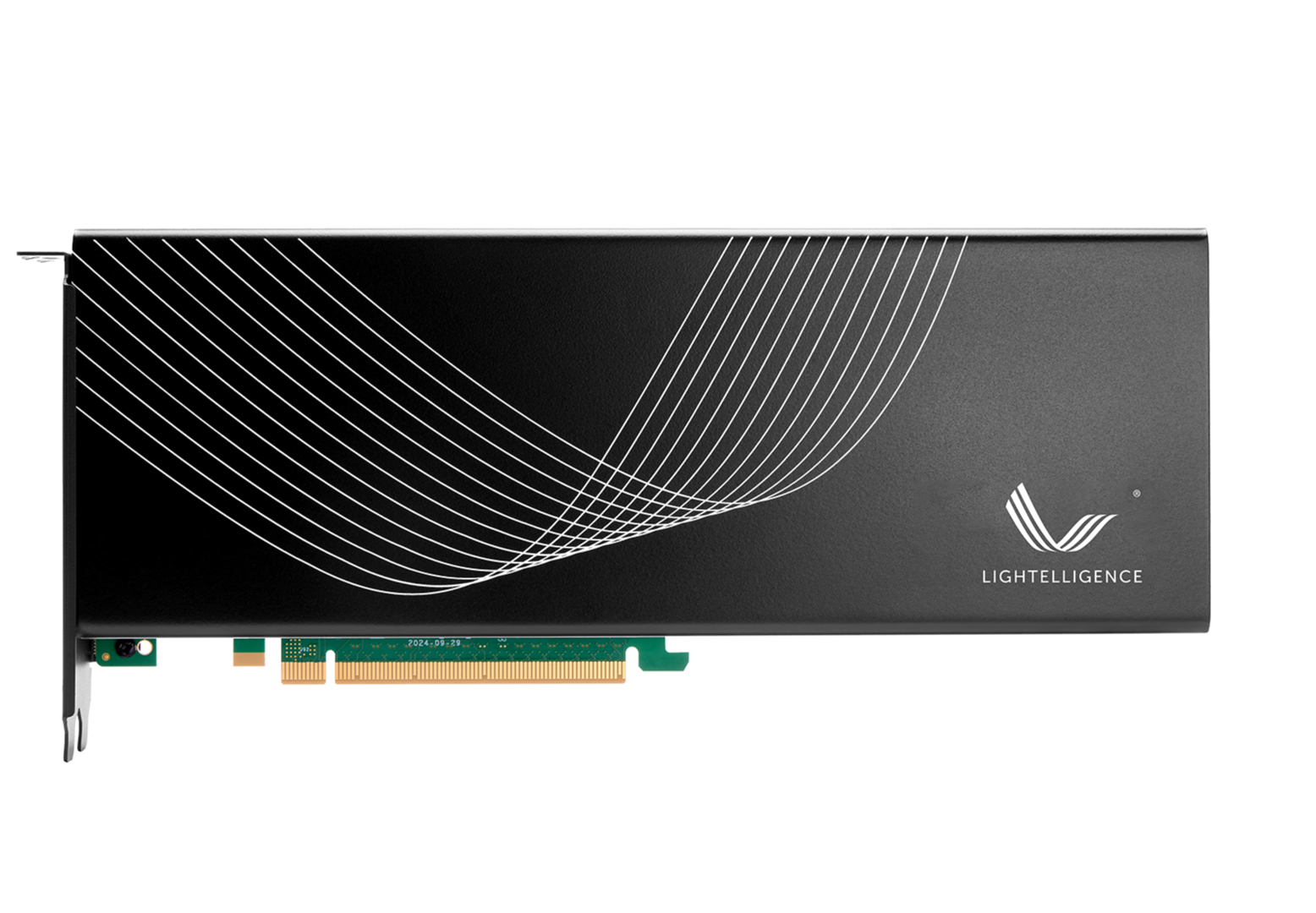
Lightelligence’s Optical Computing Chip
Lightelligence’s optical computing chip incorporates an array of optical matrix multipliers. By leveraging the principle of fast light propagation in photonic devices, it achieves the advantages of high throughput, low latency, and low power consumption. It can be applied to rapidly solve NP-complete problems, such as the maximum clique problem.
In 2021, Lightelligence introduced the PACE (Photonic Arthetric Computing Engine) optical computing processor. At its core is a 64×64 optical matrix multiplier, built by stacking an integrated silicon photonic chip and a CMOS microelectronic chip in a 3D package. A single photonic chip integrates over 10,000 photonic devices. Operating at a 1 GHz system clock, it can solve Ising problems, max-cut/min-cut problems, and maximum clique problems up to hundreds of times faster than today’s high-end GPUs.
| Table 1: PACE Parameter Values | |
| Computing Core | 64x64Optical matrix multiplier |
Numerical precision | 7bit(Effective calculation accuracy) |
| Theoretical peak computing power | 8Tops |
| Consumption | 2W |
| Energy efficiency ratio | 4Tops/W |
| (oMAC)Latency | 150ps |
Maximum Clique Problem
The maximum clique problem is a type of NP-complete problem. It is defined as follows: Given an undirected graph G=(V,E)G=(V,E), where VV is the vertex set and EE is the edge set, let UU be a subset of VV. If for any two vertices uu and vv in UU, there is an edge (u,v)∈E(u,v)∈E, then UU is called a complete subgraph of GG. The maximum clique of GG is the complete subgraph with the largest number of vertices. There is a one-to-one correspondence between cliques in graph GG and independent sets in its complement graph (denoted as G‾G). UU is a maximum clique of GG if and only if UU is a maximum independent set of G‾G. The maximum clique problem is the process of finding a complete subgraph with the maximum number of vertices in an undirected graph.
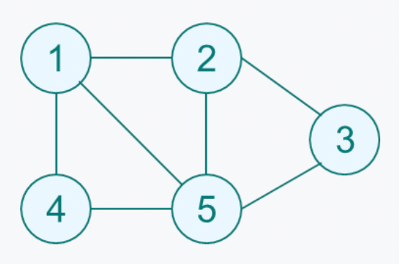
图1. 图G
For the graph shown above, the following three subgraphs are all its maximum cliques.
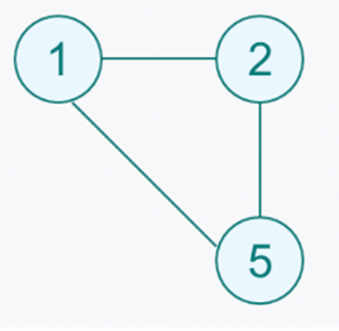
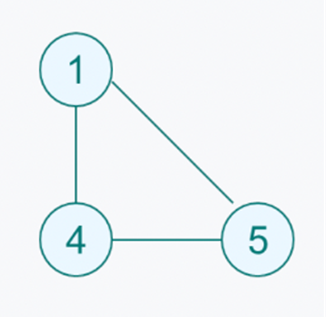
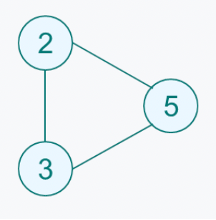
Figure 2. Maximum clique 1 Figure 3. Maximum clique 2. Figure 4. Maximum clique 3
Case Study: The Maximum Clique Problem in Pharmacophore-Based Molecular Docking for Drug Synthesis
In drug design, one approach is to synthesize a new drug from two known molecules. Each molecule contains multiple pharmacophores, and pharmacophores from the two molecules can form possible pharmacophore pairs. For each pharmacophore pair, the potential energy can be calculated based on the distance between the two pharmacophores, and the total potential energy of all pharmacophore pairs is then computed. The magnitude of the total potential energy determines the stability of the new drug.
The output of molecular docking is the predicted three-dimensional orientation of a ligand relative to a receptor binding site, along with a corresponding score for each orientation. Reliably determining the most probable ligand orientation and ranking it among a series of compounds requires both an accurate scoring function and an efficient search algorithm.
The following uses one particular binding orientation between tumor necrosis factor-α converting enzyme (TACE) and a thiol-containing arylsulfonamide compound (AS) as an example:
Step 1: Pre-processing (filtering pharmacophore sites)
Using the RDKit software package, 11 pharmacophore sites can be identified in AS and 243 pharmacophore sites in TACE, resulting in an initial binding interaction graph with 11×243=267311×243=2673 vertices. To reduce the graph size, pharmacophore sites can be further filtered based on prior knowledge. For instance, filtering criteria may include: selecting pharmacophore pairs with a spatial distance of less than 4 Å; or selecting specific chemical groups, such as hydrogen bond donors/acceptors, hydrophobic/hydrophobic groups, negatively/positively charged groups, etc. (Note: Do the distance and angle between the two molecules not affect the distance between pharmacophore pairs? If so, would that lead to multiple filtered interaction graphs? This may require traversal over multiple orientations.)
Step 2: Generate the interaction graph
After filtering, for example, 4 sites remain in AS and 6 sites remain in TACE, yielding a final interaction graph with 4×6=244×6=24 vertices, where each vertex represents a pharmacophore pair.
Step 3: Generate a weighted interaction graph
Assign a weight to each vertex (pharmacophore pair) in the interaction graph. The weight corresponds to the potential energy of that pharmacophore pair. The greater the potential energy between two pharmacophores, the stronger the binding.
Step 4: Find the weighted maximum clique (maximum clique of the weighted interaction graph)
To make the new molecule more stable, the total potential energy should be as high as possible—that is, one needs to find the weighted maximum clique in the interaction graph.
Step 5: Solve the weighted maximum clique problem
Using relevant algorithms, solve the weighted maximum clique problem to obtain the maximum potential energy for that particular three-dimensional orientation.
It should be noted that the above steps only yield the maximum potential energy for a single relative orientation of the two molecules. To find the optimal binding solution, one must traverse all possible binding orientations and compute the maximum potential energy for each. Therefore, the overall algorithm for drug synthesis imposes high demands on computational power and speed. For this reason, we propose leveraging the low latency and high bandwidth characteristics of optical computing to solve the entire problem.
References
[1] Leonardo Banchi et al. ,Molecular docking with Gaussian Boson Sampling.Sci. Adv.6,eaax1950(2020).


